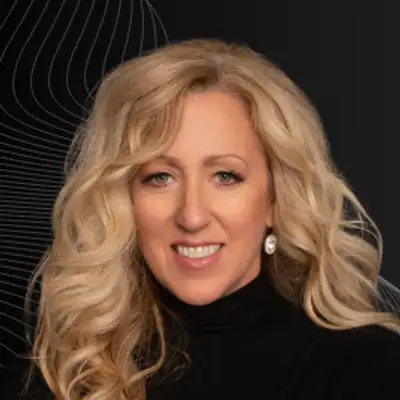
Building Sustainable Growth: Strengths, Relationships, and Referrals | Chris Carruth
Hello and welcome back to the Perfect 100.
We've had a pivot moment today.
We are in the throes of a winter storm and none of us can leave our home.
So you're getting from the home office today.
But I also, we're going to roll right in because you know, strategic plans for things.
So we're ready to roll.
So anyway, I am your host Tammy Zurak.
I haven't said in a while that I hold the business coach seat in the East Memphis chapter.
And today my guest is Chris Carruth, owner of More Than Closets, a family business his
parents started over 30 years ago.
And Chris didn't just inherit a company he chose to step into it and lead it forward.
He's also the current president of my former BNI chapter.
And since January 1st, I've been supporting that chapter as their director consultant.
And here's what's interesting, Chris's individual power of one score has gone down a
little bit into the yellow, but the chapter's performance since he's taken over has
steadily been improving.
So we're gonna talk a lot about that today.
That contrast matters.
ah The score is only as meaningful as what is happening behind the scenes.
So we'll dig into that.
But we're gonna get into family business succession leading through personal change and
later in the episode We're gonna talk about Chris's strengths and understand why he leads
the way he does So if you're building something you want to last or leading people through
growth, this should be a good one for you So let's jump in.
Hi Chris.
How are you?
Good to have you here.
All right, let's go ahead and do your 45 seconds So you can tell everybody a little bit
more about you
Okay, well, my name is Chris Carruth.
I'm one of the owners of More Than Closets in Cordova, Tennessee, and we hold the custom
home storage seat in the Greater Memphis chapter of BNI.
And what we do basically is we handle all sorts of storage issues by building custom
solutions, whether it's a closet or a pantry, a Murphy bed, garage cabinets, pretty much
any area of the home.
uh What we...
look for in terms of referrals.
We love working with general contractors who specialize in kitchen and bathroom models.
We love helping homeowners also uh solve problems to make their house more livable.
And we are also actively hiring salespeople and an installer.
Awesome.
So let's talk about your business a little bit.
Your parents started this business over 30 years ago, before it was what it is today.
What were they doing and what did you think led them to take the leap into business
ownership?
So both of my parents made a career in nonprofits.
My father with the United Way and then with Rhodes College and my mom uh through multiple
homes for uh disabled, uh mentally disabled youths and then teens.
uh And then she moved here and worked with a place called the Family Link, which was
downtown and got integrated with youth villages, which I think anybody in the Memphis area
knows about.
And then she went into grant writing.
Dad left Rhodes and decided he wanted to do his own thing that allowed himself some
creativity.
And there's a whole, I could do a whole show on how he came about to be in the closet
business, but it worked for him.
It helped him to feel some independence, I think.
so he started or bought into the business and built it from 1995 on.
And then I started with him in 2002.
Okay, and now have they stepped out or are they fully out or are they still, you're on?
sold the business to me uh and my partner and then uh retired.
So.
awesome.
And so I'm imagining if I was in a family business, I have never been in one myself, but
I'm the first one to step out into the business entrepreneurship and the family.
But I'm imagining that if I was somebody who started a business that having my kids come
into my business one day might be something powerful.
What was that like for you to kind of step in and then for them to, you know, move on and
you to take it over?
Well, I will say that it definitely had its ups and downs.
My dad and I have a unique relationship and we had to work on that some.
And I came from a restaurant background where I was leading uh kitchens and staffs in high
volume restaurants.
uh And it did involve lots of long talks.
And we even had a business coach that specialized in family businesses that helped us a
little bit, uh just so we could work out on our dynamics and make sure that each of us was
capitalizing on the strengths that we brought and also getting along and maintaining the
family uh harmony.
So uh it worked out well because a lot of what I brought in to the business, a lot of my
attributes were things that my dad either didn't have or didn't want to focus on.
So I did a lot of operational work while he did the sales and the thing, the front facing
things that allowed him to meet people.
The networking side of our business is something that I really pushed in the late 2000s.
And I think I finally joined BNI.
I should have looked this up, but I think we joined sometime around 2014 or 15 for our
initial run.
We had actually
visited through another business coach who was in the Greater Memphis chapter.
I had visited the Greater Memphis chapter when there were I think about 70 or 75 members
uh and it was a little intimidating to me to say the least having never been in the
networking but then fast forward several years and I went back to BNI.
talked to of someone who I'd become friends with that
They got me to come back and check it out.
And then I convinced my parents that it's something we needed to do.
Awesome.
So the succession, you know, if being in the business doesn't mean you have to stay in the
business.
So what made you decide that committing to it for your own self was the thing you wanted
to do next?
Well, it's a combination of things.
One thing is when you leave the business sector for 20 years, or even 10 years really, it
can be a challenging thing to get back into that same sector, especially from a financial
standpoint of what maybe what you're making with what you're doing and having to get more
of into an entry or low level.
management type job or position rather to get back out there.
My background being at restaurants, being an assistant restaurant manager at 40 really
wasn't an attractive thing and it's not conducive to family.
And also my educational background was in information systems and technology, but I hadn't
really touched it since 1995.
And that's an industry that
can really leave you behind quickly if you're not paying attention.
So uh it seemed like the natural fit to try to take this and turn it into something bigger
than what it was uh when we bought it.
That's awesome.
Yeah, all of those things.
And sometimes it goes the opposite direction is a lot of people, I came from a corporate
background and went to starting my own business.
So I went from a nice salary and benefits and all the things to now you're on your own.
So go figure out how to make that money back again versus going from decent back to, um
but the restaurant business has its own set of things.
um And the IT thing also is everything my husband worked in.
uh
He worked with computers a lot when he was much younger and then he went to work corporate
and he, you know, he always felt like maybe he could fall back on that, but he'd have to
start all over again because, you know, especially today, the pace of things is like, you
know, it's insane.
Yeah.
It's the continuing education that's required in that industry is pretty intense.
Yeah, for sure.
Yeah, it's an ongoing and with AI now it's like, you know, being on a rocket ship, trying
to keep up with all the changes of everything that's that's next for us.
So very interesting.
All right.
So before we go deeper, let's go into your power of one, because I did allude to it at the
front end.
So and your palms report.
So Chris has a total score of 65 in the yellow.
He has 20 points for attendance.
He's not missed a one and being president, that's probably a good thing because you're the
head of the show as they say.
um Referrals per week, five in the gray, visitors per week, five in the gray, one to ones,
a total of 20 points in the green and CEUs per week, 15 in the yellow.
So you're just five points from hitting that green number.
while we're here, let's go through the palms.
So no absences.
uh
Referrals given inside three, referrals given outside 10, referrals received inside one,
referrals received outside six.
Visitors three, one to ones 39.
Thank you for closed business given $5,591 and 22 CEUs and that's in 26 weeks.
So how do you feel about that?
I have some thoughts, but I wanna hear what your thoughts are first.
Um, you know, the, the referrals are the one thing that, uh, that sometimes is the most
difficult thing for me, uh, mostly because of the pace that I hit the ground at when I
leave my meeting.
and, uh, I've, feel like my referrals have actually uptick to just a little bit in the
last couple of months.
and you know, the visitors, I'm not surprised to see visitors, uh, typically seem to be
the challenging thing for.
quite a few people to bring in.
For me, once again, some of it, everybody's got a reason that they're struggling and for
me, some of it is the pace.
We uh have a pretty small staff at my job and so I'm not always successful at working on
the business instead of in the business.
I get sucked into the business quite a bit and uh that can get in the way a little bit but
I'm starting to work up some partnerships.
uh For example, we have uh a water remediation company.
Somebody goes in to help with water damage or fire damage.
And I have had a few customers who had some water leaks that they called us in.
But we weren't actually doing new work.
We were going in to remove some work that we had done before it got ruined.
And I was able to turn them over to somebody.
So uh I'm starting to work on those partnerships with the people in my chapter that I can.
immediately turn some business towards.
uh And I've given, I've got a couple of partners outside of my chapter that I haven't been
able to fill their seats like a professional organizer or something like that, that I get
lots of, with my job, I get quite a bit of opportunity to refer.
Yeah, well, in life happens, right?
So no one is expecting that we're all gonna be in the green all the time.
It's amazing when you are, but, and it's not to be green for green sake, it's to be green
for your business, right?
Is what we're trying to do.
But I wanted to point out, cause I think this is an important uh leadership moment, I'll
call it, is I sit in on your, I've been sitting in on your chapters, uh leadership team
meetings.
And so this is a chapter that has,
weekly leadership team meetings, which I can tell you from experience that not everyone
does.
And I had the benefit of now that I'm over the chapter, I can see the reports a little
deeper and we dove through those last week.
And so I got a chance to see the steady climb that your chapter is on since you guys took
over.
So the leadership team, they meet all three and talk about direction and where they're
heading and what they want to do and how they're going to make things better.
So, and it's very evident to me that that climb has been steady since October.
I think it started towards September, but it's been straight uphill since then.
And so your scores have been, you were 75, then you were 70, and then now you're 65.
So that.
oftentimes that balance of, you're pouring into your, obviously you have your own business
to run and you can only do so much if you have a short staff, you're doing the work.
That is a lot of people.
And then we talk about now we're committing to run the meeting and also guide with the
leadership team, what do we wanna do and how do we wanna make it better?
So there's an outlay there of.
what I like to call personal time that you would spend on your own self in your own BNI
experience that you're putting into your chapter.
while the chapters, the, you will still reap the benefits to some degree of that, because
when you grow, when the chapter grows, you grow too.
But there's some times there's a sacrifice.
I've been there.
I understand it.
So, you know, do I take that weekly meeting with my team or do I do a one-to-one where it
might make me more money?
um And I think it's both.
And so I want
to recognize that it isn't, there isn't, you don't have to always be agreeing to be doing
a good job.
So recognize that good jobs are done in many ways.
Do you have thoughts on any of that?
Yeah, I do and you know, it's one of these where um I Try not to fall back on that as an
excuse uh You know, I do I have I when I'm thinking about it for example I my CEU stay
pretty consistent because I do a fair amount of driving around I've got you know, Spotify
and so but I've tried to be To I have to try to pick and choose which ones I listen to try
to to find the ones that look like something
that I would both find interesting and might help me with something that I'm working uh
on.
I think visitors, I always come back to visitors because one a month doesn't seem like
that much to ask.
um Quite often with the circles that I'm in right now with the Chamber of Commerce and
some other things like that, uh I'm talking to someone about BNI.
that has already experienced BNI on some level.
m And, you know, it's maybe even already a member or has been a member before.
breaking out of those circles to find people who um don't have some sort of preconceived
notion is always fun.
I mean, I've got somebody I've been working on, honestly, for six months that I just have
to find the right time, but he's also in a trade and getting tradespeople to show up.
or to feel like they have time to show up, uh you know, at seven o'clock in the morning uh
can be its own challenge.
And that's, but that's who I encounter quite a bit.
So the visitors thing is one that seems to not take up as much time if I can do it.
uh One-to-ones are becoming a little bit more natural.
I really think at the end of this month and really maybe the end of this week, I'm going
to be back in the green.
back up to 70 at least because I do have some CEUs.
I thought I'd put them in.
um But I'm kind of back on my feet after the holidays and I'm getting some momentum to try
to because momentum for me it's all about momentum.
You know if I can get momentum I'm good.
The minute I take a week off I have to build that momentum back up and I recognize that
about myself.
Well, and you know, you have three visitors in the last, this was 26 weeks.
So you've had three visitors.
So even though you only have five, because you must not have had any prior that, that
we're kind of pulling that pulling, cause it's a six month report.
So they're, pulling in the, all of that.
So it ebbs and it flows and you know, what we focus on grows.
boy, I just made a whole rhyme there.
But, you know, I just wanted to point out that leadership.
load can often impact this.
You're not the first person I've seen that was in leadership and has dipped, you're just
five points off.
it doesn't take that much, the last episode, which hasn't come out yet for everybody to
listen to you, but if you've listened, by the time this one comes out, you may have
listened to that.
We talked a lot about maintaining your...
activity at a higher level because it's much easier to keep it in Chris's a perfect
example.
He's at 65.
He was at 70 last month.
He's gonna be right back up there again.
So it's a lot easier to keep it higher than it is to climb from the bottom.
So and that's just keeping things going for your businesses.
I can also see from the director consultant reports, you know when people's activity
drops, so does what's coming into their business or referrals drop.
both given and received and thank you for closed business drops because we're not doing
the things that we signed up to do because that's what makes it work.
So I wanted to make sure we talked a little bit about that, steering that ship.
I've also managed to leverage my ability to visit other chapters to get, I've worked
outside of my chapters quite a bit, which includes my one-to-ones.
So, uh and a lot of my thing for closed business that I've gotten has been by expanding
my, you know, my reach through BNI.
That's how.
Yeah, even if you, know, people are hesitant, I think, if they have someone in other
chapters, if you're represented in every chapter, you're a realtor.
um You know, I think that people are hesitant to go and visit other chapters, but you
can't, that doesn't mean you can't go and talk to people.
It just means you want to have the conversation first about, you know, I'm not here to
step on your toes.
But I do want to know if there's anything we don't overlap on so I can talk about that.
And that's often the case, right?
Is there's maybe somebody's not licensed in this state or that if you're a realtor, but we
all are in BNI to help each other grow.
So I think that giver's gain of it is even if somebody comes to visit your chapter that
does the same thing as you.
all of your people are not running off to go see them now.
You build the relationship with you in your chapter, that's the whole point, as somebody
coming in to visit isn't gonna steal your business.
that's a great way to build, especially if you don't have other people that compete with
you.
So that's
awesome.
So you stepped into the president's role.
Have you been in that role before when you were in the first round of the night?
was both, so in my previous chapter, I went from education to membership chair to VP and
then to, from VP I went to secretary treasurer, but I left during that term.
So I had done everything up to getting to president.
uh This oh is when VP was uh quite a bit more labor intensive, I guess would be the word,
than it is now.
uh But I mostly, I really enjoy being up in front of everybody and talking and being able
to add some positive tone and, uh but keep things professional.
I just like to be, I don't mind being in front of a crowd like that.
uh
And I also tend to be pretty opinionated about how I think things can be done or things
can be improved upon, which I think we're probably going to talk about later in this
podcast.
So what happens is I usually end up doing something because um if I, I believe if I'm
going to open my mouth with suggestions, I should be ready to contribute more than just a
suggestion to try to help things get better.
And, and so.
uh That's one of the things that led me uh to talk to the leadership last year about
becoming president.
uh you know, it was pretty intentional with how we did it as far as my current leadership
team and I.
uh My vice president and I, Stacey, we had a pretty long conversation before either of us
uh agreed to what we were going to do.
And uh then we had a meeting before that, before we even took over.
We went to lunch, the three of us, and we talked about the tone we wanted to set.
So we really set the team up well, which is one of the things that I thought was important
to do, rather than just putting the people who wanted to do the job into the job, which
I'm not saying that's necessarily what happened, but I have seen that happen where each
position was kind of decided independently of each other.
And I don't think that's how you build a team.
Right, well, yes and yes, lot of things you just said is oftentimes we don't have anyone
that will even step up.
we end up with whoever said they would if they had to.
Right, and that's not necessarily the best plan going forward.
uh You're in one of the biggest chapters, if not the biggest, I haven't looked at the
Mississippi chapters that are part of us yet, but you're in the biggest chapter that is in
the Tennessee market that's part of our region.
right now.
So something good is happening.
And when you guys got together, what was the first thing you decided needed attention for
growth to happen?
uh tone and attitude.
I felt like we needed to and intention.
Honestly, the main thing I talked about the two things that I remember talking about the
most were um keeping everything positive um because it can be pretty easy for people to
fall into some gripes and things like that.
um But we needed to keep everything positive to get to have some forward movement.
But also everything that we we do as a leadership team, everything we
we try to manage people to do or every idea we put out there that we want the chapter to
embrace has to have some intent behind it.
It has to be an intentional thing where we're not just saying, hey, we're gonna do this.
What we're saying is uh this is what we would like to do.
This is how we would like to do it.
And this is how we think it's going to benefit the chapter, which is the why we wanna do
it.
uh And if we can articulate that,
then we have a lot more participation.
uh It's one of the ways, one of the things we did, and it didn't really take shape the way
that I had pictured it taking shape in my head, but that's kind of what happens when you
turn it over to other people.
uh But, you know, it's one of the ways that we've curated, like the list of people who we
want to come to our visitor day.
uh It's a little bit different type of list than what I've seen in most of the chapters
that I've visited or been to or been a part of.
where we didn't focus on uh empowering or increasing one specific uh power group, for
example.
uh We pulled the whole chapter so we can uh potentially get visitors in for seats that we
want to fill, that we can both give and receive referrals from uh kind of naturally right
off the bat.
And the thought is that...
that's going to help our growth as much as anything else because it can help us with
retention.
And it puts a solid why, ah know, it replaces givers gain because we told people we didn't
just want them to pick seats that they could get business from.
It needed to be members that we can also um show benefits to fairly quickly.
And that's a really good way instead of just pulling 10 health industry related seats.
that may or may not really even have good options in the Mid-South area, we're being a
little more intentional.
Okay, love that.
um One thing that presidents sometimes struggle with is when to step in because you kind
of said that right as you you didn't envision it going in your head the way it's going.
So when do you decide, you what's that balance look like?
When do you step in and when don't you?
Well, so the way I looked at it is this was an idea I had, but I turned it over to the
membership committee.
I explained it as well as I could.
uh the way that it went, the way we did it the first time around, we saw some things.
was, for example, there were multiple categories that were chosen because they allowed
They sent out the entire uh list of seats that BNI has on the BNI website, which is quite
a few.
And so what happened is we had maybe three different seats, maybe a business coach, a
business consultant, and then some other sort of business coaching seat that clearly
people were saying the same thing.
They just, because everybody's different, they had latched onto that seat when all three
of the seats were very, very similar.
it functioned.
So we paired those together, right?
And we just said business coach or something along those lines.
I think the key to it, because this is the first, it's the very beginning, it's first time
we've tried it, is uh not necessarily to step in right away.
I think it's better to step in once the first iteration is there
what we do is we look at how it went and then we uh decide what needs to be tweaked and
what doesn't need to be tweaked.
And it's not saying anything was done incorrectly.
We just take an idea and it's going to morph each time we try it until we get it right or
until we get something that seems to work well.
if it doesn't work, it doesn't work.
It's always a danger when you try to do something different than what everybody is used to
is sometimes it doesn't work the first time and everybody's okay, we're gonna go back to
the way we used to, we've always done it.
And I think it's important to stick with it and try to continue to improve it.
And then you just have to have a, you have to set kind of a point where it's okay, this
isn't working, let's try something else.
I don't have a point for this particular program yet that I'm going to be at that.
I'm going to say that in my head, but I definitely think we're going to get at least
through two focus visitor days uh using this system or a version of it before we really
think about going to in a different direction.
Sure, well, and I think that one of our core values is innovation.
trying things that are a little unique and different from just because somebody else
hasn't done it doesn't mean it's a bad thing.
Oftentimes it's a really good thing, but until you do it, you don't know.
learning and, go ahead.
sorry.
I also think it's important that, um, that you evaluate each thing individually.
cause there are some things that as a leader, you have to step in and say, well, we're
going to stop this right now and we're going to in a different direction.
Something like the, you know, positive attitudes, you know, if you see people sliding into
a pattern of, um, that older chapters like ours can sometimes slide into where people, uh,
People have seen a lot of things and they gripe or it's just very easy to to backslide a
little bit.
And you know, I think it's important when we see those things that we positively reinforce
what we want uh instead of it's you don't go in and I think the term that I've heard
before is the beatings will continue until morale improves.
That's not what we're doing, right?
We want we want to give people a reason to have an improved morale.
And when they start to slide backwards, want to encourage them and prop them up a little
bit.
Yeah, that's kind of the opposite of the positive attitude um that we all subscribe to.
So I'm glad that's not the case.
All right, so let's roll over to your CliftonStrengths and see why you lead the way you
do.
So I'm gonna read them for the audience in case they can't see them.
So your number one strength is woo.
You love meeting new people and winning them over.
You enjoy socializing and making connections.
Your number two is Intellection.
You enjoy deep thinking.
You're introspective and appreciate intellectual discussions.
Your number three is Adaptability.
You prefer to go with the flow.
You take things as they come and discover the future one day at a time.
Your number four is Strategic.
You quickly spot patterns and issues that others miss.
You generate alternative paths forward and choose the most effective one.
Sounds like what we were just talking about.
And number five, developer, you recognize and cultivate the potential in others.
You spot the signs of each small improvement and love when you see someone make progress.
All right, so I know you said, we talked a little bit before this, you said you were
surprised, well, you weren't surprised, execution.
So the themes, I haven't brought up the themes in a minute.
So the colors that were on there, you had one, uh the first one, Woo is an influencing
theme, and then Intellection and Strategic are strategic thinking themes, and then you had
Adaptability and Developer, which are relationship building themes.
You did not have an executing theme.
So how do you feel about not having an executing theme, at least in your top five?
Not surprised, honestly.
uh I can be a bit of a procrastinator and uh I've always, a lot of people will say that
they are a delegator and uh that can be something that is challenging for me in my job
because specifically, you know, if we're installing material for a closet or something
somewhere and I have somebody that's been doing it for a month uh and I see them
struggling with something.
It's very difficult to step, not to say just let me do it.
Which is different than hey, let me show you a way to do this that'll make it not as much
of a struggle.
But I do, one of my favorite things, I used to tell people, well I still tell people this,
when I was managing restaurants for example, and I was in a college town, and the favorite
thing to do was see these kids that worked for us.
graduating, moving on to a career that they were excited about and being able to give
them, actively give them a good review or a good reference to an employer when they
called.
I've always enjoyed helping people move forward.
know, even if it was within a company I was in and somebody that came up under me was
promoted and went somewhere else in the company to work and I was part of that.
And so I've...
Some of the way that the CliftonStrength stuff works together did not surprise me.
uh Execution can be a challenge for me sometimes.
uh If I'm part of a team, can manage, for example, a leadership team where I have some
ideas but I want help executing them.
uh I think it's important to find somebody that you work well with that can bring that to
the table.
And I have that in both Stacey and Brandy on my team.
uh
And so a lot of it is just give them my thoughts, kind of let them move forward with it,
and then provide them any and all support that I can provide.
Yeah, what I was going to bring up is that you very well may have, based on what you've
been saying, probably have, excuse me, high ideation.
um That's probably six through 10.
That's in the unseen stuff.
You can go back and unlock that if you want to see more.
But where, when you just do your top five, you don't get the full picture, so to speak.
You get what you fall into day to day.
um So you probably have that in the execution themes.
probably have some in that too, because it doesn't mean you don't have any, it just means
that's just not your top set of things that you go to.
But I love looking at how things work together.
So in your top five, you have woo plus intellectual.
A lot of people think connecting with others and deep thinking are opposites.
How did those two work together for you, especially in conversations with clients or
members or even the leadership team?
uh Well, I mean, I think that the the thing the the breaking the ice is definitely part of
it, but um It's very important if you're going to be a communicator to you have to have
listening skills and I've not always been the best at that, but I've always recognized the
value of it.
And so I've actually practiced it quite a bit And so I really if I can talk to someone
about my ideas, that's great
ah But then it's important that you share airtime when you're in a conversation whether
it's professionally, uh personally, uh I think taking the time to listen to somebody and
their ideas uh is equally important to being able to, maybe more important honestly, to
being able to express mine because they might hear an idea that you can latch onto uh and
maybe you can contribute to that.
uh
So I think that's where the deep thought in the, you have deeper conversations with
somebody, especially if you get someone who has something they're passionate about.
uh It can be very valuable for building trust and building the relationship, but it also
can help you improve.
uh And it's fun.
It's fun to listen to somebody talking about something about which they have a passion or
a drive for.
So I think that's.
I think the two kind of play off of each other or for me they do.
probably, that's not for everybody, but for me I think that uh that's where they play off
of each other's and I love to ask questions about what someone is talking about and then
just be quiet and let them, you know, let them regale me with their ideas or whatever they
have.
Yeah, well, and I love in BNI, I think that's what makes us unique is if you go to, you
know, I'm a chamber ambassador and you can go to all the chamber events, but oftentimes
it's not a two way street, right?
It's a very, sometimes very one way street, which is not always pleasant.
So the thing about BNI is we teach you how to be both, right?
As you're
The one-to-one is designed for us both to give information and take information so that we
can help each other.
And when you go to other things, it's not just chambering.
Oftentimes, you're gonna run into people who know how to do that, and that's great, but
it's not always that way.
And that's the unique value I think that we have is that we teach that, right?
So we can all be great.
And that listening half the time.
You know, two ears, one mouth thing.
Listening is, you know, twice as much as you talk, which I sometimes struggle with because
I like to talk.
yeah.
Yeah.
So you also have strategic and adaptability.
So you have the ability to see where things are going while also responding in real time.
ah So that adaptability is a flexibility that not everybody has.
So how does that combination help you make decisions when things don't go exactly as
planned?
Well, uh you know, a big part of it for me is, uh and I'm in a theater family now, and
we've talked about this, uh is uh it's not really a never let them see you sweat thing,
but it's just, you know, if you don't, if you're responding to a crisis, whether it's uh
for me, if it's in a job site, or if it's...
uh
getting to my meeting and booting up my computer and finding out that BNI Plus has
completely wiped everything clean and is down, which is what happened last Thursday.
uh And then trying to figure out a way to recover from that and lead, you know, go through
a process, whether it's leading the meeting or, you know, sometimes when we're on
installation, something goes wrong.
uh
rather than expressing anything about it going wrong, you turn to a different direction
and you just turn towards a solution.
And honestly, waiting tables and bartending probably and managing restaurants because it's
such a chaotic uh environment probably helped me out quite a bit with that skill.
uh But that's, you know, literally, it's funny that that came up when I saw it because
literally last Thursday uh we tried to open up BNI Plus.
and our meeting was completely wiped clean.
And we were able to, between Brandy and I, uh come up with a plan and she generated a
PowerPoint of slides that she had and we managed to have our meeting go through uh very,
very smoothly.
uh And...
That's one of the reasons I wanted to be president is because I like being up there in
front of everybody and having to think on my feet and a lot of kind of stuff.
So uh that's, I could give lots of examples, but I get a lot.
just say, I get quite a bit of opportunity, especially working in people's homes.
uh Never knowing really what you're ultimately going to walk into as far as construction
goes.
I get more opportunity than I would like to admit to practice.
uh
kind of pivoting in the moment.
uh
Well, and so the BNI plus thing, which is that's first time I've heard that where it
didn't work.
I was just throw in a solution here, uh potential solution.
You can download, you can download a deck.
Am I crazy?
Can you download from, if it's working, let's just say it's working.
Can you go in and download a deck from?
Yes.
don't know, because we haven't had to worry about it.
It's been pretty rock solid.
uh And in the moment, the entire site wasn't working.
uh And we basically PowerPointed through to the 10-minute speaker.
And I had my laptop open and connected to BNI Plus or connected to the internet.
And I kept refreshing it.
And it started working at some point.
And so the 10-minute speaker.
used his own laptop for his PowerPoint.
And then when we switched off of him, instead of going back to ours, I took my computer up
and plugged it in and picked up where the meeting had left off and we finished out with an
A+.
I might, because I'm not the one running this in any of the chapters, but I feel like in
the training that there was a section where they said you could download it because
sometimes some of the rooms that people meet in have sketchy wifi.
they, okay.
I mean, we have sketchy Wi-Fi, so that's what we thought it worked at first.
um And we just went through the checklist, know, the techie checklist, trying to figure
out what was going wrong uh until finally we just did what we did.
uh And it did start working within probably 30 minutes.
Okay, that's awesome.
I feel like that's what I just wanted as a potential solution is while it's kind of like
we're sitting right now in a winter storm, which is why I'm broadcasting from here.
So in all the, know, we had plenty of notice all of us in this area.
So those of you listening from outside, had, well, anywhere from snow to sleet to south of
us, significant uh freezing rain to where
like the city of Oxford, Mississippi is in a crisis because they have so many downed trees
and no power and all the things.
But all of us knew four or five, at least six days in advance this was coming.
So we prepped ahead and everybody, of course we're in the South.
So they cleaned out all the bread and the milk and all the fun things that you don't need
to clean this.
Yeah, there are no sandwiches for anyone for a while.
But.
where I was going with that is the planning ahead.
So if you're running BNI Plus and, or even if you're not, if you're just running, what we
used to do before we even had BNI Plus was I would upload a deck for the weekly meeting up
to the cloud and the cloud where the three of us, the leadership team had access to it
because I, once I was on my way, the only time I've ever missed, and I didn't miss it,
I've never ever missed a meeting.
um or not, I had a sub, you know, if I always had a sub, if I couldn't be there, but just
not showed up is I got hit.
I had an accident on the way to meet the meeting and I was like texting, know, like trying
to figure out what I was gonna do.
I ended up showing up for the end of the meeting, but I had uploaded um the deck to the
cloud so they could download it.
So BNI +, I believe you can download it.
So you can have a one, even if it's old, it's probably better than standing up in front of
a group with nothing.
um You guys were able to.
having our leadership team meeting today and that's one of the subjects we're going to
talk about, is what we can do to not have to stay the next time.
Yeah, I love that you pivoted and that's amazing.
But for those that are listening to that, if you want to just as a backup plan, I was
gonna say, it's like, I knew I might have to do this.
We weren't gonna cancel it.
We wanted to still do the podcast.
So we just did it from here.
So we brought all the stuff that we needed, hopefully minus one little thing for me and
one little thing for you, but it's all working out.
anyway, all right, back to the show.
um So you also have developer and Woo.
um So you're wired to engage people and help them grow.
um How does that pairing show up when you're working with somebody who doesn't yet see
their potential?
ah You know, it can be tricky uh because usually at that point you're dealing with someone
who maybe just doesn't have the confidence to see what they need to see uh and I find it's
a kind of a delicate thing because the way that I usually handle that is uh giving them
some responsibility, putting them in a position that I know that they've got everything
they need from a skill set and a personality to
to succeed at uh and finding something small enough to give them just like a little bit of
confidence and building it up that way.
uh But I also think that when you see somebody uh doing something well, uh or if you see
somebody that is uh succeeding or even somebody who's maybe just conquering uh a fear of
some sorts, you know, we have a member of our chapter who's fairly new who didn't, who
was.
terrified, think, I won't say he's terrified, but he was not comfortable doing his 32nd
presentation.
uh And he's been killing it for at least a month.
And uh it's just a matter of letting someone know if you see, if you know somebody
especially is struggling with something, you see them doing well at it, then you need to
let them know.
uh But frankly, I think that it's even better if you see someone doing something well,
whether you know they're struggling or not, let them know.
Yes.
Yes.
But from a leadership standpoint, I think you can't just give somebody confidence.
You've got to give them a path to that.
um And then you have to give them recognition along the way.
um And it needs to be genuine and not um necessarily uh from a, I call it not cheerleading
necessarily.
uh It needs to be sincere and sometimes cheerleading can come across as insincere.
But you have to kind of judge it based off of personality and how someone's going to
react.
Somebody is not comfortable being in the spotlight.
They're not going to want you just calling them out and saying, hey, everybody give this
person a round of applause, but pulling them to the side at the end of the meeting and
say, man, I think that was really good.
You go a long way.
Love that.
So tailoring it to the individual.
And you made a point in there too that I think it gets overlooked that people volunteer to
do leadership roles and people don't recognize, if you've never been in the top three
positions, know, ELT, then you don't know what goes into it.
It's a lot.
And we often just sort of overlook that, you you show up every week and you put on the
show.
and nobody says anything, it's nice sometimes to say thanks to the people that nobody's
getting paid to do this, they're just doing it because it's helpful, somebody has to do it
and if you have a penchant for those kinds of things, it's great when you can apply them
to something that will help your business and everybody else's growth too.
if you haven't said thank you to your.
president or vice president or secretary treasurer recently, when you go to your meeting
this week, do that.
All right, so in terms of your, this doesn't have to be BNI, but what's one early mistake
in business or leadership that shaped how you operate today?
Um, I think the biggest mistake that we made when we bought the business from my parents,
um, and honestly, probably as a mistake that was made, um, that could have been corrected
when I joined the business in 2002 that would have the business in a completely different
place than it is right now.
Um, we were, we knew we needed to grow.
Um, we didn't know what to do to grow.
And instead of finding an advisor or a mentor of some sort, we just kind of tried whatever
and didn't really, we didn't have a plan.
We didn't have any sort of structure.
I believe that having a mentor, even in 2002, when I first came up here, at least when I
started really getting into operations and interested in growing the business, which
happened fairly quickly.
I think one of my biggest mistakes that I would correct would be not finding a mentor that
could help me recognize my strengths and how to use them, but also help me strategize ways
to deal with the things that I'm not necessarily strong at.
I knew that you were gonna like that answer, yeah.
of course I'm going to love that.
I agree.
You know, I think, I've talked on previous episodes about I've had mentors all along the
way and, you know, both when I work corporate and in my business.
And I think there's no, I'm a, you know, strategy and maximizer.
So for me,
The quickest route to the top is find somebody else who's done that and figure out what
they did and then make it your own.
um So I think that's a great way to move.
I love that that's the lesson that you're sharing with the rest of us.
So let's look forward.
What excites you most about what you're building now, both in your business and your
chapter?
uh For the chapter, I just look forward to, you we set some growth goals.
um And what I'm really looking forward to with the chapter itself, as I'm hoping to hand
it off next year uh with some positive, with the momentum that we've got and not see
sometimes from leadership change to leadership change, it can be a whole different uh
personality set of personalities and
So you can get a lot of inconsistency from year to year.
And we would like to set things up for a consistent handoff, but also to keep moving
forward and hopefully have some things in place that are easy to continue because
everybody will be used to doing them.
um So I think for me, the chapter, I would like to see us grow.
um I will be honest, I'm not somebody that thinks that
that a 75 or 80 person chapter would be fun to be in.
But I think 50 people would be great.
But I'm excited to see the changes that having a higher membership brings to how we have
to operate a meeting, for example, uh and to keep everybody moving forward and keep the
positivity the bigger we get.
uh from a personal standpoint for the business, we...
I'm excited.
We do have a business coach and you know, and I'm excited to to get some traction to
because we have a lot of the behind the scenes stuff we've got fairly solved right now.
So now we're just in the the phase that a lot of small businesses, especially construction
light is what I call what we do.
We're going to where we're we need to staff up and it's combination of filling our
schedule enough to keep everybody busy.
and then adding uh salespeople to be able to create business so we can hire more people to
install.
We have some modest goals uh and we're hoping to build the business to a point that we can
sell it.
Awesome.
What do you hope if you were to look back five years, what do you hope the legacy that you
left for your chapter and your leadership are in BNI?
um I think that I would like if I haven't really thought about my legacy of being I
because I don't think I don't think on those terms I guess but right I'm in the middle of
it I haven't had time to think about that.
um
And, Intellection likes to think a lot before they think, before they,
like for people, think, to look back on our year and have a positive memory of it, but
also have numbers to back that up.
So, you know, I don't think it's necessarily judged off of your end of year close of
business, you know, thank you for close business number.
think that's a contribution.
We're of the mindset that growth
and everybody enjoying being together as a group uh will feed off of each other and will
supply a lot of the other things.
uh So if I had to think of a legacy, I would just like people to uh remember us seeming
like we had our act together.
you know, and just that when we had ideas, uh they weren't mysterious.
People understood them and we were patient.
m
We propped up as many of our members as we could to help them be successful.
Love that, that's good stuff there.
And if somebody wanted to build a service business or lead a chapter that lasts, what do
you think is the first thing they should get right?
Um, from a business standpoint, I think that, um, systems and, um, a lot of the important
kind of boring parts of owning and running a business need to be, uh, buttoned down pretty
tight.
Um, you know, a good accountant, um, the bookkeeping being organized in a way that makes
sense.
Um, marketing and budgeting, uh, at least being
Structure even if you're not sure what the budgets need to be when you're first starting
out I think if you can get that groundwork laid it allows you to make a strategy that's
won't be more effective to try to be successful in generating and building the business uh
From a chapter standpoint uh I really just think communication and being able to clearly
communicate your ideas uh and Would be willing to listen
And that doesn't always mean, I mean, I have plenty of people in my chapter who have come
to me with ideas of things that they wanted to do.
But I don't always take those suggestions and run with them, but I give them all uh the
thought that I think they deserve.
They all deserve to be uh examined.
maybe even sometimes I've gone back to a member and said, you know, what if we take your
idea but we do it?
a little different to do it this way.
So it's more collaboration.
And I think those two things, I think that's a very important thing for BNI chapter is I
think communication is very important.
I think being consistent and being uh clear and listening as much as you speak, maybe more
probably, because the members are who driving the chapter.
And so you need to be able to listen to them.
and then kind of organize your thoughts out of
Yeah, love that.
You got to have the team all kind of rowing in the same direction.
So that's good stuff.
And the points about having all the systems people in place, can often, not everybody can
afford that when they're starting out to have, you know, all those different players, so
to speak, but they still have to be done in an effective way.
So, you know, you have to come to it with a strategy of what am I going to do until then
kind of thing.
So I love that.
All It is time for the.
it's important.
I think it's important.
um If you can't afford it, that you afford as much of it as you can to get.
Whatever you do the least of.
Not in the least effective way, for sure.
All right, so now it is time for the quick fire round.
So just quick short answers to some fun questions.
uh First thing you do in the morning that sets the tone for the day.
well, my morning routine is pretty set and it's not very impressive.
I honestly, I take, uh, about an hour to myself.
and then, um, I take some intentional time, um, fixing breakfast for my kids and talking
with them.
Uh, and then that gets me kind of in a good mindset for when everybody leaves for school,
to
kind of move out into my day.
Okay, awesome.
Harder part of leadership, starting momentum or sustaining it?
Oh man, um I think honestly sustaining it right now is probably the most challenging.
One thing people misunderstand about leading a chapter.
that it takes more work than they have time.
For sure.
uh Folding or hanging and why is one of them wrong?
uh Yes.
So here is uh the short answer from a guy who designs custom closets for a living.
uh There's not a right or wrong way.
uh It's an individual space and it's an individual choice.
And our job is to uh design with that in mind and not to change it.
Okay, perfect.
Best lessons come from successes or mistakes.
Mistakes.
Okay, I agree.
uh If you could ban one thing from ever entering a closet again, what would it be?
uh furniture.
Dressers specifically, dressers.
Okay.
My husband has a dresser in his closet.
uh It does, although he doesn't have nearly as much stuff as I do, but yeah, I couldn't
fit a dresser in mine.
The second thing on that list for the sake of saying it is pants hung by the cuff.
Okay, that that's a bad thing.
yes, that's, I mean, I'm not saying it's a bad thing.
don't, uh, it makes my job a lot.
Okay, I've never seen that, so that's interesting.
ah One thing business owners overthink way too much.
Just one thing ah
I think probably marketing.
Okay.
All right.
And your original tagline was it's 7am.
Do you know where your pants are?
How important has it been to keep a sense of humor and playfulness while building
something serious?
I think it's always important.
I think you can be a good mixture of both.
uh I actually have that on my new business cards.
It went away briefly, uh but my dad thought of it.
uh so as an homage to him, I put it on my cards when I ran out.
Nice.
All right.
And finish this sentence.
Leadership to me means...
Setting an example and staying positive and not getting discouraged.
Love that.
All right.
So this episode is a great reminder that leadership isn't about chasing a perfect score.
It's about direction, ownership and trajectory.
And a yellow score paired with clear leadership and rising engagement is often healthier
than a green score with no momentum.
So Chris, thank you for being here.
All right.
Loved having you.
And before we wrap up, I wanted to thank everybody for listening, especially my fellow BNI
members.
Remember to give yourself a CEU.
And if this conversation helped you think differently about leadership, performance, or
capacity, be sure to subscribe so you don't miss any future episodes.
Like the episode so it reaches more people and share it with a fellow BNI member.
And if you want to understand how to explain what I do, this episode is a great way.
You hear things that we're talking about.
I help people grow and so that's what I'm looking for.
But thank you all for being here and we'll see you next time on The Perfect 100.
Creators and Guests