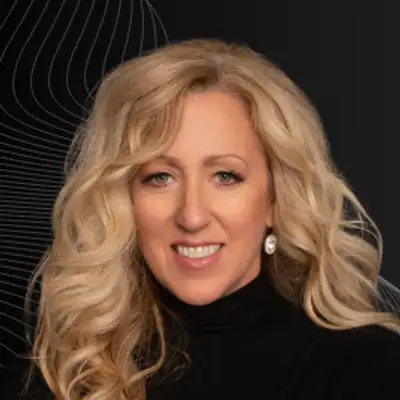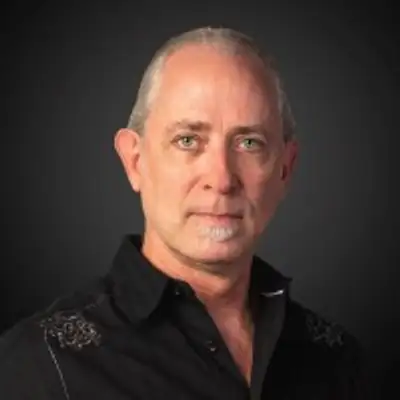
Strengths That Drive Success: Robert Brown on BNI Referrals & Business Growth
Hello and welcome back to the Perfect 100 podcast.
I'm your host, Tammy Zurak.
Today I'm joined by someone whose career blends creativity, strategy, and purpose, Robert
Brown, the owner of Twang Design Studio in Fort Myers, Florida.
Before launching his studio, Robert spent years in the apparel industry as an executive,
helping J America expand from supplying college bookstores to getting their sweatshirt and
t-shirt lines into high-end big box retailers nationwide.
He built and led art teams, shaped brand decisions and translated ideas into products
people actually wanted to wear.
When he moved to Florida 10 years ago, he built both a business and a network from the
ground up.
And today he's a leader in the BNI fireside chapter, one of the largest and most
successful chapters in the region.
He served as vice president, president on the membership committee and as visitor host and
was recommended to me by his area director.
Robert, I'm so excited to have you here.
How are you today?
you so much, Tammy.
It is an honor to be here with you today.
yeah, mean, Robert Brown, Twang Design Studio.
We are a brand development, brand management studio.
We specialize in helping young entrepreneurs and people that have gone in and bought
businesses rebrand themselves or brand themselves.
uh giving them their visual identity and helping them find their mission and vision
statements.
uh We help guide them and let them do what they do best.
ah And we do what we do best to help develop their brand in the marketplace and drive uh
customer loyalty through what we do for them.
Awesome.
I love that you rolled right into uh telling us who you were, because usually I have to
tell people what to do.
I'm really good at doing that.
I'm just kidding.
All right.
Everybody who knows me just laughed.
um So you've had kind of a fascinating career.
Like I said, you've kind of led art teams, creative design in the apparel industry, and
now you run your own design studio.
What does Twang Design Studio focus on today and what part of your work makes you
you to give you the most satisfaction.
You know, uh being in the apparel industry and uh for many years, I'm not going to go, you
know, in depth on how many years.
Right.
uh I did a lot of trend researching and in different markets.
And over the years, I learned how to identify what is driving business and identifying
niches in the marketplace.
Being able to bring that to my clients now as a brand developer is I can go in and look at
their industry, uh their specialty, look at their competition in the marketplace, and help
them develop their niche and elevate their look above all the noise.
So that's in a nutshell kind of what we do here.
Okay, cool.
And J America, as I also mentioned, hired you specifically to help kind of elevate the
line that they were working on.
They had their stuff in campus bookstores.
And when we were talking about that pre the interview here, I had a flashback to going to,
I went to Kent State and going in and you're real excited to get all your campus gear.
um And so that was where the niche was, but they wanted to move it forward.
So.
um What did, and you wanted to go into the big box retailer.
So what did that transition teach you about large scale branding and product development?
Well, even before J America, I was working with uh large box retailers in a couple of
different departments.
And in those departments, I learned what uh triggers the merchandise managers and the
DMMs, uh divisional managers, uh to give you space in their planograms and in their retail
space.
uh With J America,
They were the leaders in high-end uh bookstores.
uh They were exclusive in Notre Dame's bookstore, one of the best bookstores in the
country.
uh Very loyal uh base there, the alumni base.
uh They had broken into online.
We wanted to take that kind of high-end merchandise and bring it to these high-end
retailers.
We had to differentiate.
because we couldn't sell the same thing we were selling at the bookstore because that was
more exclusive.
But we wanted to elevate it above what was happening in the uh lower tier, uh the targets
and the Walmarts of the world so that it felt like it matched the mix that you would have
at those higher level retail stores.
Right.
I worked for, when I was in, it must have been in between high school and college.
I must have been, or it had to have been college.
I worked for The Gap.
And so I just had, again, I had a flashback too when you were talking about this, you
know, just folding everything and looking perfect and the presentation and.
you know, kind of trying to because you said the planograms and that was that that hit my
brain like a ton of bricks because everything had literally they had t-shirt folders and
you know, everything had to be just so so what is that thing that you know, how did you
differentiate?
What is that thing that makes you unique?
Well, you know, it's mostly, it came into the garment.
mean, the decoration techniques are what they are.
There's screen print, there's uh embroidery, uh there's some other embossing kind of
techniques that we could use.
But the garments and the fabrics that we use are really what elevated uh the product uh to
make it fit in with, you know, the overall feel of the store.
Yeah, that makes sense.
uh I know that I tend to avoid places like Target and the Walmarts of the world for that
reason is you can feel the difference when you buy a sweater or you buy, you know that
sweater's gonna be, you're not gonna be able to wear it next year.
Right.
Right.
versus a higher end garment.
You can feel the difference from the start.
It's not scratchy, all the things that kind of that lower thread counts, I guess, and
things like that cause when that is not a luxury experience.
Right, right.
mean, the bookstores really, the bookstores taught us that those, that long lasting
fabric, the heavier weights, the more refined finish on the outside, uh better sewing
techniques, uh you know, if we were doing blocking or whatever with the silhouettes that
we were presenting, we could target specific areas in the store.
So we could do a ladies, we could do a juniors look.
We could do young men's looks and then we could do more traditional, you know, what we
call the varsity look, which is, you know, stadium wear.
ah So that was interesting in how we laid out the mix so that it could fit in not just one
department in several departments in the store.
I find this very interesting because I, for people that either listen to the podcast or
know me know that I've focused on helping people build their brands in their business, but
not in the way that you do.
So it's always interesting as it plays out across different, know, those of us, there's a
lot of different ways to tackle your brand.
I was a portrait photographer, you know, for a long time, I helped people take pictures
that they could use to brand themselves.
And you're talking about a different way of standing out, whether that's a look, a feel.
an arrangement, know, even the association.
I always like to think about my husband's business, which is where my podcast studio sits
within, it's in a strip mall.
And when you pull into the strip mall, it doesn't look, how do I want to say this?
Our little slice of the pie looks nicer than...
some of the rest of them.
You know, and that makes the differences.
Everything from the minute your eyeballs hit something to the full experience walking
through the door, everything matters.
And if you're a brand that doesn't have a retail space, that's no different.
It's, you know, that eyeballs hitting your stuff is online or when you hand someone your
business card or
your pamphlet or whatever, you your physical presence is part of your brand.
So all of that matters.
So I love, you know, love this conversation.
And speaking of that, so you work across studio art, illustration and design to create a
brand identity.
How do those creative disciplines shape the way you help businesses develop a visual
identity?
Branding, as you know, because you're in the same industry, is all about customer
experience.
If the customer feels good about you, they feel safe about you, they feel that there's
value and quality, that is what branding should do for any company.
So we approach that from
Two areas.
Again, we go back to uh our trend research and into the marketplace, making sure that we
know who the competition is and what the niche of the company is and what their values
are.
ah Then the other part of it is is representing the owner.
ah It's a good visual identity, a good brand logo.
Should represent it should be a tool to, you know.
brand you in the marketplace, it should also be like, you know, getting a fresh haircut or
putting on your favorite shirt.
You know, it's that feeling that you get when you put it on and you show it that you have
pride in what it is.
So I like to include something about the owner, about the company personally, as well as
professionally to get that just right logo ah that does
Two things, makes the owner feel good about themselves and it makes the customer feel good
about the business.
Yeah, love that.
My husband always jokes that my hair is part of my brand.
So, because I've had this kind of hair for quite some time and people pick me out of a
room because the hair looks the way the hair looks.
And he's like, you you should probably work that into your brand.
So I'm like, I don't know if I want a big hairdo as part of my fray on, but there's that
thought.
So.
Right.
Right.
I mentioned you're in BNI fireside chapter, which right now is around 50 members, but it
was once as big as 72 members before Hurricane Ian hit.
And for those of you that aren't familiar with Ian, I had to look this up, but it happened
in 2022 and it was the deadliest hurricane to strike the state of Florida since 1935 and
became the third costliest weather disaster on record worldwide.
uh Having been in BNI for a very long time, I know when a natural disaster happens that
BNI members pull together.
Can you tell me a little bit about that time?
You know, the economy in Fort Myers, Florida, because we're a snowbird area of Florida.
So our population rises and falls with the seasons.
And the economy here is really driven by the trades, which helps a BNI chapter a lot,
because if the trades are rocking, then you're trading a lot of dollars and a lot of
referrals in the chapter.
and beyond the chapter in the whole area.
Ian hit and all the trades were very busy afterwards.
The GCs, everybody.
uh And so we dropped quite a few members just because they couldn't show up to the
meeting.
uh And we tried to do some modification.
Pivot.
uh
keyword there, pivot, and open up Zoom again, which we had some pretty good practice with
because of the pandemic.
So we allowed them to be on the work site and try to keep them engaged and involved and
did a blended thing.
But even after that, we lost a lot of members.
a member of my chapter who was president at the time and I was vice president at the time
got our heads together and really started driving some membership
visitor days and contests and things to up visitor participation in the chapter.
And that's actually after and that we got up to 72 members because of those those things.
We got people coming back.
We've got people with that could see that after the bubble of all the construction and
roofs and everything.
there was going to be a lull that they could, if they didn't keep up with their networking
and keep up with their branding and their marketing, they could be left out in the cold
once everything happened.
They still needed to eat, so they still needed to be talking to people.
Yep, I mean, you can eat today, but it's also important to eat tomorrow.
So that's the message we gave them and it worked out great for us.
Yeah, you know, and that even without the, you know, the severity of a hurricane kind of
wiping out the area, that's a, that's it's true regardless, right?
As for a lot of tradespeople, it's a feast and famine kind of business.
you know, they kind of HVAC through the summer, well here where I'm in the mid-south, so
it gets hot and, or in the winter, you know, I lived up north before, you know, then it
just kind of flip flops, but.
the at certain points, certain, you know, lawns in, you know, the the north oh need
attention and then they need snow plowing in the winter if you're up north.
So those things kind of those things ebb and flow.
But the smart business person recognizes that you've got to kind of figure out that ebb
and flow and you've got to put away for the slower times and you've got to have a plan
even in the busier times.
That's the biggest challenge I think we have in BNI is we
not the biggest, but one of the biggest, I guess, is when we get a lot of people who they
get super busy and they're one owner, you know, one person in their business, and then
they're too busy to come to BNI.
that is, every time I see that and they leave, I think, you know, that's such a not, such
not a good move because, you know, you've got to plan for those times.
You're not always going to be busy unless you have some very unique business that nobody
else has.
which exists, but you know, it's not normal if you're HVAC or whatever.
So, love that you brought that up.
And you're absolutely right.
mean, the key to BNI chapter, especially trades, is having that owner there because the
buck stops there.
You know, the next best is a business development manager or a sales manager.
But having that owner there, when they say something or they commit to something, they
don't have to answer to anybody.
It's, you know, so.
But you're right.
Once BNI kicks in and they become so busy, we've had that happen so many times.
You try to tell them, don't do this.
You'll regret it.
we almost need a business plan on the front end.
You know, it's when we're interviewing people, we don't, I don't know that we all ask what
happens when we blow your business up.
What then?
You know, because you're the only one.
So if you're doing all the work, then what happens?
What's your plan?
And, know, if they don't have one, then maybe this is not the time because, you know, that
we need to figure that out or we
maybe get them with a business coach and have them figure this out.
Sounds like a good feeder system I hadn't thought of.
um Well, and I do want to ask because I know several people, well, a lot of people
probably listening to this now are not in a chapter of 50 plus people or certainly 70 plus
people.
How do you handle weekly, um the presentations, most chapters that are in the, let's say
40 or under are getting
35, 40 minutes, for their presentation.
So how does that work in a big group?
Well, we've kind of.
I mean, it has a president, past president, uh you know, getting people out on time,
especially the trades, because, you know, nine o'clock, I mean, we started our meeting,
open networking at 715 meetings starts at 730 out the door by nine o'clock.
We we really promise that.
So our weekly ask, we get now 25 seconds.
And people say, well, that's not enough time for me to ask for what I need.
You know, the thing about BNI is uh mentor coordinators and leadership really need to make
sure that we are educating new members.
The real rubber hits the road in one to ones.
That's when you get to tell your story and what your ask is.
You get 30 minutes or so, and then you get to listen for 30 minutes or so.
And then
Boom, that's where you get more business.
You're not going to get that business in a 25 or even a 45 second.
Right.
I always like to give the analogy or get people to think of it this way is if you're, if
you've heard this before, I apologize, but if you rely on your weekly presentations and
let's say there's 60 seconds, let's be generous, and there's 50 meetings in a year because
of the holidays, know, easy math is that 60 seconds times 50 meetings is 50 minutes and
then you get a feature presentation for 10 minutes.
So that's 60 minutes over the course of a year.
Do you think that's enough about your
business to get people to send other people to you.
And that's 60 seconds, right?
So that's a whole year for an hour.
I don't think that's going to work.
clearly that makes it a little easier for people to understand the one-to-one is where we
need to be.
Right.
All right.
So before we dive deeper into your BNI journey, let's talk about, we're going to roll over
to your power of one.
um So, everybody, every time I do these with people who are not in my general area, I
always enjoy the process of having them send me their PowerPoint, because it always looks
a little unique, um and yours was no different.
So, I um actually popped on the screen here.
I wanted to kind of diagnose things a little bit, because when you sent it to me, I was a
little confused.
So I want to tell everybody that Robert was referred to me because Robert was in the
Perfect 100 Club for a long time.
But we're going to talk about Robert's at 90 now and why.
And 90 is amazing.
I know he feels he wanted to explain to me why he's not a Perfect 100.
And I get that feeling once you're at 100, you want to stay there and you want to be known
for that because it's a good thing.
But 90 is just as good.
But I do want to point out who does.
Well, I want to ask first.
Who does the chart at the top?
Because yours, we don't get that in my area.
Where does yours come from?
Do you know?
It actually comes from Connect.
So uh being a graphic designer, uh I do these reports and we give them out on monthly
basis.
We do our Power of One, we do summary poems, and we do traffic lights.
And we actually hand them out with our bulletin over the course of three weeks of the
month.
uh And if you go into Connect and uh you
hit print instead of export and save as a PDF, this is what you get.
Okay, so the little roster thing, not roster, the little uh key, I guess is the word I'm
looking for at the top for those of you that are looking at it on YouTube.
And if you're not, if you're listening to us elsewhere, go on YouTube and subscribe.
uh But there's a little key at the top and it says attendance 94 % to 100 % is green and
20 points.
Yet you have attendance of 94 % and you are 15 points in the yellow.
So I just wanted to point out that you're, and I had to go in
So this was me because I'm crazy about this stuff.
I went and pulled a report to see why is this wrong?
um This should actually say and if you go to the perfect 100 .com at the very bottom of
the page I borrowed and I just did a screenshot of the corner of it But you can get the
full report at the bottom of the screen that I posted from
Thank you BNI Australia for posting it online.
um You can see that 95 % over the last six months is equal to 20 points.
So the key appears just off by one.
because you would actually be green according to the key, but you're 95%.
And so then I did a deeper dive figuring out, what does it actually mean?
Cause you told me, well actually let me, I'll do the deep dive in a second.
Let me read the reports so people listening can hear where you're at.
So you're at a total score of 90 in the green.
Your attendance is at 15 points in the yellow.
Your referrals per week are 20 points in the green.
Your visitors per week are 15 points in the yellow.
Your one-to-ones are 20 points in the green and your CEUs per week are 20 in the green.
Let's roll down to the palms report.
All right, so.
You can see in the Palms Report is a more detailed view for those of you listening that
can't see it, I will read it.
There are 23 weeks showing.
uh So for the absences, you have zero absences, but you have three subs.
And this we'll come back to and talk to you in one second, because this is the point.
uh But referrals given inside 17, referrals given outside 25.
Wow.
Referrals received inside seven, referrals received outside five, visitors five,
one-to-ones 35.
And again, we're in 23 weeks.
Thank you for Clubs Business, given $23,646 and CEUs 57.
So the point I was going to make about your, the score.
So your BNI, it depends on where you are.
because I had to search this.
In my region, which is what I went from, in my region, you get half points for a sub.
So instead of a full point, you get a half point, which is what causes you to drop.
And if you have the crux, because this is a six month report.
If you, and I did not do the math.
had to have chat GPT help me with this math because it was fairly complicated, but I spent
a lot of time.
So we're going to talk about it.
So the, the tipping point is in six months at a half point, you can have two subs and
still hit green.
And, keep up, you can keep a perfect 100, assuming you did all the other things at 20
points, which you have.
the ability hopefully to control somewhat.
You can still keep 100, because I'm like, I need to make sure I keep 100.
I run a podcast called The Perfect 100.
So more almost for my own knowledge, I was like, I better check this out, right?
So you can have two subs in six months at half point and keep 100.
You have three subs and you cannot.
that is the, because it's not.
The way, I don't, if anybody wants to see the math, send me an email, I will happily send
it to you.
But it took some calculations to go through six months and figure out what is that.
And that also depends, I will add the caveat, it depends on how many weeks are in those
six months because some months have five weeks and some months have four weeks.
That is based on a four, I think it was a four week, the way it calculated it.
But so if my math is off, it's because the weeks are off and that's J-T-B-T's off.
But just so you know, having three is gonna kill you.
But life happens, you have things to do.
Sometimes you have to have a sub.
So no detriment to you.
You sent a sub, you had zero absences.
So congratulations, you're 90.
Which was very long-winded.
So how do you feel about all of that?
Well, you know, I'm a surprisingly enough and very, very much a type personality.
So it kind of rubs my fur the wrong way, but it is what it is.
I celebrated my 40th wedding anniversary this past uh September by going to the Basque
country of Spain with my wife and spending two weeks there.
So two subs there.
And then I came back and three weeks later I went out to Colorado.
to visit with my son who is a professional mountain trail runner.
ah So I spent a week out there, had my third sub and I knew it was going to kill me but I,
you know, sometimes, you know, that work-life balance happens.
Yes, yes it does and it's a bummer when it kills your report but that's okay, you're
allowed to have a life.
And 90 is very, good.
I'm more curious about all those referrals given, how the heck does that happen?
that's all, 25 plus 17 referrals given inside and outside.
What do you do when they give so many referrals?
Well, uh you will see that I have sponsored a lot of visitors.
I'm a Gold Badge member, have been for a long time.
uh Having worked in corporate for almost 38 years, uh I never wanted to, when I started my
own company, have any kind of HR or that kind of part of it.
So I do 1099 uh freelancers to help me out with the creative end of it.
And then BNI, selfishly, is my corporation.
uh I have a printer that I invited to the chapter.
have a vehicle wrap person that I invited to the chapter.
have a, one of my best partners in the room is a printer.
I have an SEO website guy in the chapter.
uh I have a business coach in the chapter.
So I have all of these paycheck guy, a payroll guy.
uh So I can help my customers and then refer like five referrals out of each interaction I
have with my clients.
So, and I don't have any of that HR.
Right, I love that so much in so many ways.
The viewpoint of it's your business, because I say that a lot, if you listen to the
podcast, I'm constantly referring to BNI is like a business.
You're actually making it your business and you're bringing in those partners to be a part
of your team.
You just don't have to have them on your roster and have to absorb that payroll.
and they're giving you in turn the giver's gain of it.
I'm sure you're getting more business from it, but you don't have the liability of having
to employ these people and pay for all the things that go with having people report to
you.
So I love that so much.
Yeah, I mean it's worked out great uh and you're right.
It's a two way street.
My printer, she'll have people come to her.
Their logo was drawn on a napkin.
I can step in, develop logo for them, make them look good and hopefully gain them as a
client.
Same way with my website SEO guys.
Same way with my vehicle rep.
So it's a flow of business.
uh We have a very we have two very strong power teams in our chapter our trades uh power
team and our b2b family services power team so those both work oh and I also invited a
videographer into the group and he is rocking and rolling he does uh all sorts of
everything from commercial development ads uh to podcasts uh
to TikTok development for people that want to use that as their social media platform.
Yeah, that's amazing.
We just brought somebody like you into our chapter and she's only been in, I don't know,
less than a month, I would say.
And she got her featured presentation this past week and she put pictures up of all the
people in the chapter, the business coach, which is me, obviously.
And then there's a printer, there's uh a promotional products person, there's a website
person, there's a so and so.
She put pictures of us all up.
and said, this is my team.
She's four weeks in.
She already recognizes, I'm like, that's so amazing that you can look at it and see it for
what it is.
For those of you that are listening, that if you're not looking around the room in your
chapter and going, these, what Robert just said is gold, that you're, these are the people
that work in your business.
They just don't work in your business, right?
They're on your team.
And if they're not, you're looking around the room, looking at those people going, that's
not somebody I would hire.
Okay.
look at your chapter, right?
Is your membership committee, who are we accepting?
Or the people that we're keeping and the bottom of that, know, part of one is the gray
people.
Those are the people that are not contributing to your business.
Would you keep them in your business if they actually work for you?
So, you know, and that, the dividends that that pays, you know, can be life altering,
right?
Yeah.
Yeah.
So you have been a lot of roles in your chapter.
What did you learn from kind of putting on all the different hats and stretching yourself
into those different things?
At the end of the day, uh the measuring tool that I use is the DCP of VNI, visibility.
Credibility equals profitability.
So being at the front table, uh being a coordinator is that involvement that people gain
trust, credibility uh in you.
uh So for me, mean, again, a personality got to be involved.
If I'm going to do something, I'm going to be all in.
um
And, you know, finding, using my corporate background, especially helped me and vice
president, chairing the membership committee ah and doing exactly what you talk about is
not only making sure you vet who gets in the room, but addressing people that are, you
know, habitually in the gray or in the red and, you know, know, mentor them up.
ah
or mentor them out, uh you know, as needed so that your chapter is strong and you're, you
know, uh the other part that you learn to do in, especially vice president is just making
sure that you quash any, any nonsense going on.
uh And, you know, there's personalities uh in, in, you just have to make sure that
This is a business.
This is a business platform.
We don't care about your petty little deals.
We just want you to uh be a business person here.
Anything else that happens, take care of it outside of the chapter.
But don't bring that noise inside.
As a President, I just love being a cheerleader for other people.
uh One of the things that uh helps me
Stay in business and keep in business is I love working with young entrepreneurs.
ah It gives me it gives me something that I can't really put into words.
is the the thing that you know makes me get up in the morning and work ah is helping that
young entrepreneur or that new entrepreneur.
it just butters my bread so yeah
So what would you say is the biggest challenge or frustration of being in a big chapter
like that?
How do you see members struggling and how do you keep people staying visible and
connected?
Again, it's all about making sure they understand this as a business and the great thing
about our chapter is, mean, we have a good social uh side to our chapter.
We do a lot of events and spotlights and support each other.
uh If somebody's sick or whatever, mean, there's an outpouring of support in the chapter.
uh But making sure that we keep those things,
separate, but separate enough that they don't interfere with each other.
And you know, a big chapter is just making sure that we're doing the things.
mean, Dr.
Meisner learns a lot of things as he goes along.
And I'm sure you've watched a lot of his podcasts, you know, when he found out.
He did this one, so yes.
Yes, yes.
So I mean, he he talks about the mistakes that he made on the things that he learned and
the things that he modified ah as he grew into into what it is now.
ah And it continues to modify here and there as needed.
So, you know, it's all about that word pivot uh that we keep on talking about.
So that's the biggest thing for me is just making sure that you have an open mind, but you
do it the way it's written.
You don't have to reinvent the wheel.
It's laid out for you.
Just stay in the lane.
And if something comes up, just run it up the flagpole and see if leadership above you can
help you out.
Yeah, love that.
Yeah.
And for those of you that haven't seen Ivan Meisner's episode here on this podcast, he
does talk about all of those things.
And just that way, we talk a lot about why things are the way they are and how they got
that way.
So it's a, it's a great watch.
And you know, you get CEUs for all of these podcasts.
So you can go watch that one and add another one on top of this one.
So there you go.
All right, let's roll over to your CliftonStrengths.
So.
We have, I'll read from the top to the bottom.
Number one is learner.
You have a great desire to learn and want to continuously improve the process of learning
rather than the outcome excites you.
Number two is ideation.
You are fascinated by ideas.
You see connections that others don't and can view the world from different perspectives.
Number three is belief.
You have certain core values that are unchanging.
These values provide direction and a strong sense of purpose.
Your number four is strategic.
You quickly spot patterns and issues that others miss.
You generate alternative paths forward and choose the most effective one.
And your number five is achiever.
You work hard and possess a great deal of stamina.
You take immense satisfaction in being busy and productive.
So.
How do you feel about all that?
You know, it's funny, I had never done that uh particular assessment before and it's spot
on.
you know, I am 67 years old.
I have been continually uh doing something for money uh since I was 13, you know, where I
took a comic book and answered one of those ads in the back and started selling
uh greeting cards door to door in my neighborhood and yeah so I could uh I could get their
prizes they didn't pay you money but you know uh it is it is and it's that self-worth you
know part of work that gives you identity uh so that you know yeah and uh as far as the
stamina thing goes I think my wife would
Uh, agree with me when I say that, uh, I can probably never retire because I would drive
her crazy.
Um, yeah.
So I, I have to stay busy.
Uh, so she stays sane.
Um, and, that, you know, being 40 years with her is, a blessing I can't even describe.
So I want to.
Keep that going.
Keep that going.
don't want to mess that deal up.
So you're right.
Yeah, thank you.
Thank you.
Thank you.
And I live by pretty much one simple tenet.
And I will repeat it endlessly to anybody that will listen.
I will always try to do the next right thing.
And that's what I
makes me who I am as far as business and personally, it is just, just do the right thing.
It's,
You can't go wrong when you're doing that, right?
So you have a learner and ideation.
Those give you constant curiosity and a mindful of ideas.
How does that feel your creative process when you're working with clients?
You know, always I you know people ask me well, what's your style when you're when when
I'm developing a logo because most most studios they have a certain style that they do.
I do not My team, which is a freelancers, including my son, who has a degree in
illustration and graphic design.
We we kick around ideas.
I do an interview.
with the client, ah if it's a brand development client.
And I find out where they want to be, what their vision is, what their 10-year goal is,
what is the end goal.
ah And then I want to find out about them and their family and where they came from and
how they came up and what's important outside of work for them.
What are their values?
And we take that and it's a two.
two page interview list.
uh We distill that down.
We share it in in in a zoom meeting with my freelancers and then I send them off to do
things.
I am old school.
uh In in that came up in in this assessment in that I love to read.
I I I don't listen to books on tape.
I have to read the words I want to touch the book.
uh I also insist that my freelancers can draw.
every idea they come up with.
Hand drawing creates something that the digital tools can't.
The digital tools are important when you go to finalize your idea.
But for me, that hand-drawn ideation is key because it's the brain communicating directly
with your hand.
ah
it creates so we then we share these sketches, these thumbnails, sketches, and then we
say, OK, let's take this idea, this idea and you know, take it digitally and and and bring
it out a little bit further and then we get back together and make our cuts.
And usually we come up with that one.
Idea and once we get that one idea, then we you know.
We take it and we run it around the block.
Because a logo is a tool.
And that tool needs to work in all different ways.
It needs to work on websites.
It needs to work in print, on business cards, on advertising.
So we kick around signage.
uh We kick around.
actually do layouts of all those different things.
And if it doesn't work there, then we have to go back to the drawing board and find
something that does work.
Because if the tool doesn't
do what it needs to do in the real world.
You know, so.
that's not a good thing.
Well, you know, it's interesting your, the hand drawing thing that you mentioned, the, I
was listening to a couple of weeks ago that talks about right brain versus left brain and
how we're so, you know, if you have anxiety, cause you're busy all day doing the thing,
you know, following up on the emails and the phone and the this and the that, and I'm
wondering that.
So I paint, my husband has a painting school and I'm one of the students and they talked
about how painting is one of the things that it's like there's a toggle switch in your
brain.
And if you want to relieve that anxiety, you do that painting or other things that, and
yeah, there like it be meditation, things that are just right brain.
And I wonder if that thing that you're talking about doesn't just unlock the creativity a
little bit more.
then because it kind of the digital, you know, I've been a portrait photographer for more
than a decade and a lot of editing on Photoshop and all that, but that's all in your
system, right?
It isn't on a piece of paper.
And I like to, I'm still paper and I like to, you know, I like the physical touch of
things and like that as well.
I love books and I love to read.
but I have to, don't have the time in the kind of world that we live in.
I have to listen to audio books now, but I love the physical touch of a book, um you know,
and I love having, even if somebody's reading it to me, I still will buy the book and put
it on the shelf because I want to refer back to it, you know, and have the physical entity
of it because it means something.
But um I wonder if that's not kind of what your process is unlocking is that just pure
creativity.
Absolutely.
mean, you know, having a book in your hand, there's uh all sorts of senses going on there.
There's the physical touch sense, the smell of a book, you know, that ink on paper smell,
and then the actual reading the words and you can go back and if something didn't quite
click, you can go back and read that sentence over that paragraph over and then, you know,
have that ah moment of, oh, this is what this is what the
precursor of the next chapter I remember.
And yeah, so that part of it and and art is no different.
mean, you know, pulling out paper and pen or you know the smell of the ink or smell of
paint, you know, sometimes I pull out my watercolors to just do a wash or some markers and
that smell and that touch and the feel and then the senses get involved and it does it
really unlocks.
that right brain creativity in a lot of different ways, a lot of different senses.
Yeah.
And kind of soothing too, because you're not in that, you there's, can't be in an anxiety
state when you're in creative brain.
So that's, you know, just if you're listening and you're not interested in any of this,
but it's a good thing to do for your own health is to do something that is, takes you out
of that anxiety all the time by doing something creative, whatever that is for you.
So very cool.
So strategic thinkers, am my number one.
oh
strength is strategic and your number four is strategic.
So we see patterns where others see noise.
How do you apply that when a client comes to you with an unclear or messy brand?
It's that that can be a very sensitive subject because sometimes somebody gets into
business and their daughter or niece or their girlfriend or their husband has done a logo
for them.
And there you are looking at it going.
But you got to hide that you know you got to poker face that and say well I'm going to
approach that from a much more strategic.
and you know when we do that interview and when we come back and do the logo presentation,
we talk about their competition and we show them what their competition looks like.
And you know that way they can see what they have doesn't quite match.
What is going on in the marketplace and what they have to get elevated above so it is uh
key to not insult right off the bat.
and that can happen.
I'm a very, uh, animated person when I talk.
So, uh, it's hard for me to keep that poker face and, and, you know, not, you know, Yeah.
Uh, and, and, you know, step on people's toes in the beginning, a long time ago, uh, when
I first got in that I could not hide that.
And it got me, um, in trouble a couple of times.
Um, so,
It's very important to be delicate with uh especially young entrepreneurs that are just
putting their shingle out and uh making that leap and not insulting them or your family in
any way, or form.
But just show them from an analytical, strategic standpoint what you're trying to do for
them ah that's going to elevate them.
and their vision.
Perfect.
So, achiever means you thrive on productivity and action.
I also have achiever in mind as well.
How do you manage that drive while working on longer creative projects, especially ones
that require a lot of patience or many iterations of, you know, trying to get to the one
that they like?
You know, it's the key word there is patience.
uh One of the things that that whole right brain thing does uh is that you have to make
sure.
With that focus, because I can get lost, I mean, I can get totally lost in a project and I
mean all sound anything around me is gone.
It just disappears.
The flood just right there.
And one, I have to train anybody around me to not interrupt.
Because, you know, once you interrupt that train.
But it's just about patience and not everybody can see what I can see.
And I can't see everything they see.
So I got to know that about myself.
I'm not perfect.
And I know one of the things that I tell my clients
is, know why I don't do my own eye exams?
I'm not an optometrist.
You are an electrician, a plumber, a house painter, a lawyer, you know, whatever your
profession is, that's what you do.
You shouldn't be doing your own branding if you want to scale your business.
And so the bottom line is you want to scale your business, you want to get larger, you
want to grow, you want to earn more money.
then you've got to let go of some of these things that, you know.
Yeah, and you may have already said this, but what's branding mistake that you see small
businesses make again and again?
Not understanding the importance of branding is the key thing.
mean, that's the absolute key thing.
Another thing that I tell my clients is take the highest paid employee you have in your
company and that's how much you should spend on branding a year.
Okay.
And branding includes advertising, marketing, SEO, all this stuff.
uh Create that budget because that is an employee of your business.
Branding is an employee.
is doing the work that sometimes is hard to see.
And one of the things as a brand person you know is helping people understand the return
on investment, the ROI.
ah And some of that ROI is hard to quantify.
ah mean, one of the things that I tell people, one of the first things I tell people as
part of your branding experience is you have to be involved in your community.
And getting involved in your community, sponsoring different events, showing up at events,
ah donating, uh know, pick your donation spot.
Uh, you don't necessarily crow about it, but you're out there with your brand being
involved in the community is the return on investment.
Something that I can report to you on.
Not really.
Uh, but I, I will tell you it is, it is so important.
Um, and, and, know, different things that you learn over the years of doing these things.
That one is probably one of the most critical ones is be involved in your community.
Yeah, I agree.
I've gotten more so ingrained in the community in the last year or so than I ever have.
I'm m the president of the community's um Chamber of Commerce ambassadors.
it's amazing, know, people everywhere I go, even people I don't know, know me.
And that's the whole thing, right?
I mean, I know the importance of branding, but it's another layer.
I was walking, I think I've told this story before too, but...
was walking my dog in my neighborhood and a lady was pulling in or out of her driveway and
she wanted to see my dog and so we got talking and she knew who I was and I was, never,
I'm like, have we met?
And she's like, no.
I'm like, how do you know?
I'm like, are you stalking me?
What's going on here?
And she, I had photographed her friends and she knew who I was because of that.
She had seen my picture.
She'd been referred to me.
and I've never met her, but she knew I was the lady walking in her neighborhood with my
dog.
So I was like, people, this is branding, right?
It's when people know who you are and you don't know who they are, that's when you know
you've started on the right journey.
So that's great, I love that.
um What is the biggest transformation you've seen when somebody finally does invest in
their brand in the right way?
You know, there's so many stories that picking one out.
We had a company here.
This is a good one.
A company here uh and in the transformation of Southwest Florida, especially the Fort
Myers Cape Coral area over the last.
I don't know 50 years has been.
Amazing, uh you know 50 years ago Fort Myers was a.
uh
fishing and shrimping business.
That's what drove the economy.
ah And it has evolved past that.
I shrimping is still a big thing here, fishing less so.
But now uh it has been found as a destination for the snowbirds.
So it's really a bedroom community.
A lot of uh
gated communities, upscale communities.
uh And then you have a lot of communities that are people that are 12, 12 monthers that
are in the service uh industry or in the trades that are supporting the snowbirds.
ah So that's what drives the economy.
Now, uh Bo's Electric here in Fort Myers was one of those original electric companies.
Um, I obviously started by a guy named Bo.
Um, and one of the things that I tend to tell my, my, my clients, unless you're a law
office or a doctor's office, do not name your company after yourself.
because at the end of, know, end of the line, you want to sell your business.
People don't necessarily want your name on their business.
Um, so, uh, Bo was started the business in 73.
Ran it up until I think it was 2000, 15, 16.
Sold it to a guy that had never been in the electric business before, but he was a
coordinator of a guy that just knew how to pull people together to make a business run.
He bought the business.
Now, Bo's logo was, I think, some lettering that he bought at the hardware store.
Okay.
on the side of his truck.
It was just black lettering on a white truck and it said, Bo's Electric.
That was the whole branding technique for both.
And it was all word of mouth how he got his business.
uh
We went in there.
My friend bought the business.
And let's see, we got involved with him through BNI.
And we rebranded him, got him a new logo, sat down with him, helped him figure out how to
do vehicle wraps, how to get business cards, got him into BNI.
And he built that business.
And Bo's was probably doing, I don't know.
And I really don't know the bottom line numbers, but he was doing less than a million
dollars a year.
four years, four and a half years, they were the King Kong of generators here in Southwest
Florida, which is a huge business.
They were the largest distributor of uh at home generators.
They even bought a gas company so they could actually install gas tanks or hook them up to
uh existing infrastructure.
uh And they sold the business for $20 million in four and half years.
Now, that is a great story uh for how to build a brand where no brand existed before.
Yeah, that's amazing.
Love that.
ah Yeah, it's so, you know, don't, I think most people, how do I put this?
People don't spend their time thinking about their brand.
They just go, and it's just like being a business coach.
Most people are busy, heads down, doing the thing they do.
You know, they've got a skill, talent, product, whatever it is, they're doing that.
and that's what they're doing.
And they're not looking at their whole business across all the fronts, holistically
saying, um I hitting on all fronts?
Because can you do all the things?
No, like you said with the I, you're not your own eye doctor.
You can't possibly, I can't possibly do all the things well.
I have to employ people who, I can learn how to do those things, but I'm not gonna be
nearly as efficient.
or successful at those things as people who actually do that for work.
Because that's their thing, I've got my lane, I'm going to stay in it.
And if you don't take the time to step back and go, OK, where are we going here?
And are we equipped to get there?
And um that's a great way to, it's coming into the new year here.
So it's a great time to sit back and take stock of, OK, how did we do?
And what are we doing next year?
So I love that.
um
You know, I don't know if I would, I don't know if I would change anything.
mean, you know, in college I was a painting and illustration major uh in the art
department and I was a double major.
I was also in theater technical.
So I designed sets and lighting and sound.
So.
Those things were all great.
And I, I, I got out of college and my first job was at a apparel company.
And how that happened is, uh, while I was in school, one of my classmates, dad, it was
North Carolina, Western Carolina university up in, up in the mountains of North Carolina,
uh, apparel was still being made in this country.
and there were textile mills all over North Carolina.
And one of my classmates' father owned a textile mill and would sell us like irregular
t-shirts for like 25 cents a piece.
And we would buy them by the carton load.
we, and I think the statute of limitations have run out, but we would borrow the equipment
and inks and squeegees from the print department at the art school.
uh
for those of you not watching there was a quote unquote borrow.
And then we had student labor, all the other art students, and we printed t-shirts for
intramural teams, sororities, fraternities, clubs.
We made enough money in two semesters to buy a house.
And we were like, hey.
And so, yeah, we got something here.
So when I got out of college, I was beating the street trying to get a job as an
illustrator.
uh
Washington DC and, and I was not having a lot of success there.
ah DC is not an art town.
It's, it's a four year town.
just, and it was right.
So it was just doing layout and paste up and I wasn't about that.
Um, but I answered an ad for an apparel company who wanted to add t-shirts to their mix.
And I was like, dad, I can do so.
I develop that for them.
So the bottom line is follow.
not just your education, but follow what you're good at.
Just follow that path and again, just do the next right thing.
Just keep on doing the next right thing.
Follow your path.
Follow what comes comfortably.
What gives you happiness?
And then you'll be happy.
Don't get in a job and be miserable.
Yes, yes, no reason to do that for sure.
Take a chance it might work out.
Yeah.
All right.
And if somebody listening wants to improve their branding but doesn't know where to start,
what's the very first step they should take?
Coming!
I figured that might be it.
no, again, it gets back to what we've been talking about is you're good at what you do.
And I'm good at what I do.
And you're good at what you do.
Tammy is good at what she does.
So give unto Caesar that which is Caesar's and you stay focused on what you're good at.
And we just talked about that is, you know, do the right thing for you and let other
people do what's right for you.
Right?
One of the things that I learned while being a manager in corporate is the hardest thing
for a manager to do is let other people be right.
if I get out of the way and I let other people be right and successful, then I'm
successful.
ah So the key there is don't hold on to something that really distracts you from what
you're best at.
Let people come into your business life that are going to partner with you to help elevate
your business.
and get them in your chapter, right?
Yeah.
All right, so we're gonna roll to the quickfire round.
This is just a quick, fun, fast answers and then we'll wrap up for the day.
So number one question, if Bea and I had a hall of fame, what would you wanna be
remembered for?
just being a great cheerleader.
that's that.
that's good.
All right, what's something people would be surprised to learn about you?
I play bass.
love, actually my bass is sitting right here.
Nice.
Okay.
Well, and I don't know if that rolls into this one, but what song would you, what song
would play if you walked into a client meeting like a prize fighter?
Ramones, hey ho, let's go.
Okay, perfect.
What's your creative ritual before starting a big project?
The interview.
The interview.
All right.
And if you could redesign any famous brands logo, which would you tackle first?
That's a tough one.
Wow.
There's so many.
Yeah, there is that I use that as a great base for people.
Don't mess with don't if it's working, don't mess with it.
But probably Johnson and Johnson.
Okay.
All right.
And Perfect Saturday, what's on the list?
A run and a big breakfast.
All right.
And what's the coolest project you ever worked on in the apparel world?
Answer in just one sentence.
uh developed a line of silk accessories for Peter Max
Okay.
What's the most underrated color and design?
green.
Okay.
was thinking, I don't know why when I had that question, chartreuse came to mind.
Yeah, exactly.
That's when you said that's why I mentioned it.
Who's been a key mentor and what's a lesson you still carry from that mentor?
ah A man named Jim Schmitz, who was a retail giant in Madison, Wisconsin, one of the
things that he always told me is, I never got rich by saying no, but I'd lost money by
saying yes.
Hmm, interesting.
That's good advice.
um Big box stores or campus stores, which audience is harder to design for?
ah Audience, campus stores.
Okay, and what always makes you laugh?
My son.
Okay.
And finish this sentence, success to me looks like.
Happiness.
All right, well Robert, thank you so much for being here today.
I loved hearing about your creative journey, your BNI leadership journey, um how your
strengths showing up and all the things that you do.
Appreciate you ugh, appreciate you taking your time out to tell us your story today.
Well, thanks for inviting me.
It's been a joy.
And I can't wait to get to know you a little bit more uh in a business uh referral
situation.
Yes, for sure.
Yeah, we have some definite crossover.
So that's awesome.
I look forward to doing another one-to-one with you.
And for our listeners, this is episode 30, the final episode of season one of the Perfect
100 podcast.
If you have been with me from the beginning, thank you.
And if you're newer to the show, this is the perfect chance to catch up on all of the
episodes you have not heard yet in the new year before we start season two next year.
uh I also have a fun surprise coming in December, a special real estate mashup episode
will be featuring some of the incredible agents, lenders, professionals, et cetera that
we've had on throughout this first season.
So you don't want to miss that.
And before we go, I want to say a huge thank you for those of you that helped me to get
the 100 subscribers.
We are now surpassed on YouTube.
So I certainly appreciate that.
uh
That goal was mentioned over the last couple of episodes and it's meaningful to me that
you all have helped me get there.
And don't stop though, cause you know, now there's a new one, cause I'm an achiever.
So now let's go for 200.
So I look forward to seeing you all in the new year.
Thanks for listening and we'll see you next time on season two of the Perfect 100.
Creators and Guests